3–7×
cycle time
99.9%
accuracy
66%
hours cut
15+
teammates onboarded
Creative technologist, problem-solver, audio engineer. I notice the thing nobody else is looking at, sit with it until it makes sense, and build something useful out of what I find.

Creative tech, audio engineering, and the factory floor. Three backgrounds most people don't combine. I built a career on the seams.
I studied Creative Technology at Illinois State, a program built for hybrids who don't fit cleanly into "designer," "engineer," or "artist" because the interesting work lives between those categories. Since 2021 I've spent every year deepening that range.
Before any of the technical work, there was sound. Years engineering, producing, and mixing. Vocal sessions, livestream boards, late-night studio sessions. Releases shipped, repeat clients, work I still stand behind. Audio taught me the patience to hear the problem nobody else is hearing, the taste to know when something is actually finished, and the humility to stay with it until it's right. Those instincts carry into every technical problem I touch.
Two years at Rivian taught me what production looks like from the inside. What breaks. What drags. Where good people end up doing work a computer should be doing. When I rotated onto the Autonomy team, I didn't just complete my queue. I spotted a repetitive sub-task nobody was fixing, built a tool for it on personal time, and shipped 3 to 7× throughput gains without dropping accuracy.
Creative ear. Engineering instinct. Real operational experience. That's what I bring. I teach myself whatever the problem demands, ship something, iterate until it's right. I've done it in studios, on the line, and on my own time.
Configurable macro utility that records, replays, and binds repeated input sequences to single hotkeys. Deployed on the Rivian autonomy annotation pipeline; delivered 3 to 7× personal throughput gains at 99.9% accuracy. Read the full case study below.
Local-first multi-agent AI system I've been running always-on since March. Spans a home GPU and a VPS, with sub-agent orchestration and shared persistent state. Not a wrapper. Costs effectively nothing per query.
A desktop overlay built in Rust that gives teams a tactical UI advantage by surfacing information the base game buries — all from public APIs, fully above-board. Shipped to spread the edge and support larger coordinated battles.
Advising and contributing on a friend's crypto project from launch through active ops. Working-dev perspective: contract logic, architecture feedback, shipping cadence. Details private.
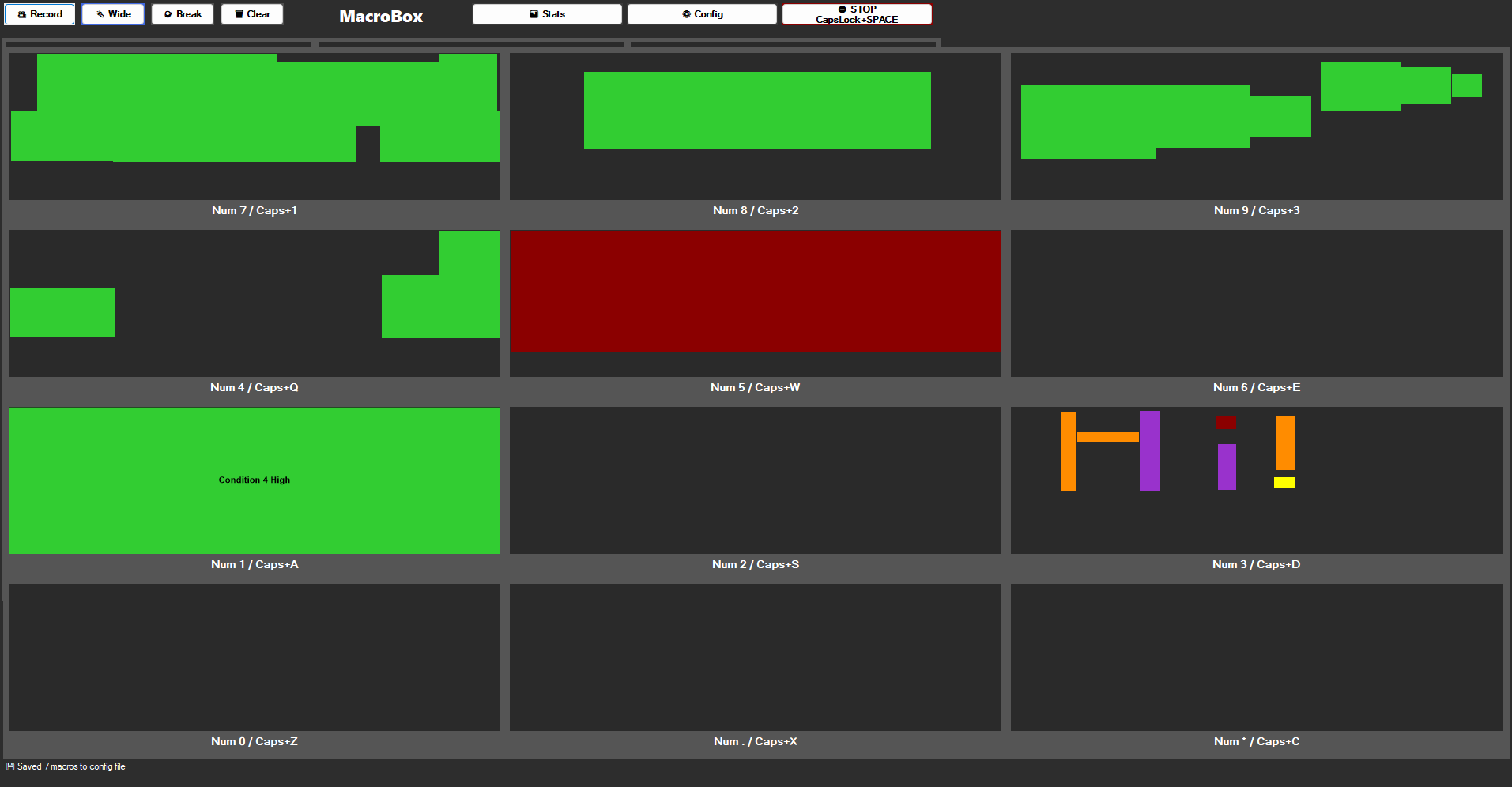
Project Annotate ran on a high-volume repetitive workflow. The kind where good people burn out doing work a computer should be doing. I built MacroBox, a configurable Windows macro utility that records, replays, and binds repeated input sequences to single hotkeys. It's the tool I ran every day on the Rivian autonomy pipeline.
The annotation workflow required the same handful of input sequences over and over. The kind of pattern that's imperceptible on day one and painful by month two. Nobody had automated it because it wasn't officially part of the job to fix.
I designed a simple mental model: every sequence I ran more than three times should be a hotkey. MacroBox records raw input with exact timing, saves it to a named slot, and rebinds it to a key combo or numpad shortcut I won't confuse with real work.
Stopped myself from over-engineering. AutoHotkey was already on the machine. No install, no dependencies, no permissions fight. Added Record / Stats / Config / Break / Wide / Clear controls, live visual feedback per slot, and a STOP combo so it never runs when I don't want it to.
Same sequence, same accuracy. Measured gains range from 3× to 7× depending on the repetitive content of the task and the operator's fluency with the tool. The demo above lands around the middle of that range. Across a full shift this compounds into hours of reclaimed focus for whoever runs it. 15+ teammates adopted it; I wrote the training materials and onboarded each of them myself.
I watch the workflow closely before I touch anything. The right problem to solve is almost never the one on the whiteboard. It's the one people have stopped complaining about because they assume it's just how things are.
Years behind a mixing console taught me to trust my gut on when something is "done" and when it isn't. I bring that same discernment to technical work: a willingness to sit with something until it's actually right.
I can read a factory lead, a software engineer, and a studio client in the same week without losing anyone. That range is rare, and it's the reason the things I build actually land with people.